



Choosing wooden bar stools looks simple until you realise that a 10cm difference in seat height can completely change how comfortable they feel. A stool that looks perfect online can leave your knees squeezed against the benchtop, while one that is too low can make eating, working or chatting at the kitchen island feel strangely awkward.
For Australian homes, the decision usually comes down to 65cm counter-height stools versus 75cm bar-height stools. Standard residential kitchen benches are commonly around 90cm high, while raised bars and bar-height tables are typically higher. Australian furniture guidance therefore generally pairs a 65cm seat with residential kitchen benches and a 75cm seat with surfaces around 100–110cm high.
The important point is that you should never choose your stool height from the words “bar stool” alone. Measure the surface it will sit under first, then choose the seat height that gives your legs enough room. This guide explains exactly how to do that and when a 65cm or 75cm wooden bar stool makes the better choice.
What Is the Real Difference Between 65cm and 75cm Bar Stools?
The 65cm and 75cm measurements refer to the seat height from the floor, not necessarily the overall height of the stool. A stool with a backrest can be much taller overall. For example, a wooden Ashbury stool has a 76cm seat height but an overall height of 103cm.
That distinction matters because it is the relationship between the seat and the underside of your benchtop that determines whether your legs have enough space.
In practical terms:
|
Stool seat height |
Best suited to |
Typical use |
|
Around 65cm |
Approximately 90–95cm surfaces |
Kitchen islands, breakfast bars, kitchen counters |
|
Around 75cm |
Approximately 100–110cm surfaces |
Raised bars, high tables, entertaining areas |
Australian furniture guidance commonly recommends a 650mm stool for a 900–950mm residential kitchen bench and a 750mm stool for a 1000–1100mm bar-height surface.
This is why a 75cm stool should not automatically be considered “better” simply because it is taller. The correct stool is the one that fits the height of the surface.
The Seat-to-Bench Clearance Rule Matters More Than the Label
A useful target is roughly 25cm between the stool seat and the underside of the counter, with about 20–30cm being a practical range depending on the stool and the people using it.
That explains the problem with putting a 75cm stool beneath a standard 90cm kitchen bench. Even before allowing for the thickness of the benchtop, there is only around 15cm between the seat and the top surface. This is generally too tight for comfortable seating.
Conversely, placing a 65cm stool at a very high 110cm bar produces so much vertical separation that the user sits noticeably below the working or dining surface.
When a 65cm Wooden Bar Stool Is the Better Choice
For most standard Australian kitchen islands and benches, 65cm is the safer starting point.
Residential benchtops are commonly around 900–920mm high, while some designs extend closer to 950mm. Australian kitchen and furniture guidance consistently positions stools in the mid-60cm range as the natural match for these surfaces.
A 65cm wooden stool therefore works particularly well when the kitchen island is being used for breakfast, homework, casual dining or working from a laptop. The user sits high enough to interact naturally with the benchtop without having their thighs pushed against it.
A 65cm stool is likely to be your best option when:
-
Your kitchen bench or island measures approximately 90–95cm high.
-
You want everyday kitchen seating rather than seating for a raised home bar.
-
Adults and children will regularly use the stools, making easy access especially useful.
-
You prefer a counter stool that visually sits lower and more discreetly beneath the island.
The distinction is already reflected in wooden-stool ranges sold in Australia. Only Dining Chairs, for example, offers 65cm models such as its Lucca and Novus designs, with the Lucca specification confirming a 65cm seat height.
There are also designs offered in two separate heights for exactly this reason. The Mandurah teak stool comes in a 65cm counter-height version and a taller 78cm bar-height version, demonstrating that the same basic furniture style may need different dimensions depending on where it will be used.
For a typical 90cm kitchen island, therefore, do not choose the taller version simply because it is described as a “bar stool.” The 65cm option is normally the more appropriate proportion.

When a 75cm Wooden Bar Stool Makes More Sense
A 75cm stool belongs with a genuinely taller surface.
Australian guidance typically pairs stools around 75cm with benches, bars or tables between approximately 100cm and 110cm high.
Imagine a purpose-built entertaining bar that measures 105cm high. A 75cm stool leaves around 30cm between the seat and the top of the bar before allowing for the benchtop structure, placing the user at a natural height for drinks, meals and conversation. A 65cm stool at the same surface would leave the user another 10cm lower, which can make the bar feel disproportionately high.
This height is therefore more appropriate for home bars, raised breakfast-bar sections, commercial-style counters and high dining tables rather than ordinary kitchen cabinetry.
Products around this height are common in taller seating designs. Only Dining Chairs lists the Ashbury wooden stool with a 76cm seat height, while its Mandurah range offers a 78cm version specifically differentiated from its 65cm counter stool.
The mistake to avoid is assuming that a tall or visually substantial kitchen island automatically needs 75cm stools. Measure it. A large stone island can still be only 90cm high.
How to Measure for Wooden Bar Stools Before Ordering
Measuring takes a few minutes and is far easier than discovering that an entire set of stools does not fit.
Start by measuring vertically from your finished floor to the underside of the bench or bar where your knees will actually sit. Measuring the underside is useful because benchtops vary in thickness, and leg clearance is what determines comfort.
Check Height, Overhang and Stool Spacing Together
Height is only one part of the fit. Before purchasing wooden bar stools:
-
Measure the underside of the bench, not just a height quoted on building plans.
-
Aim for roughly 20–30cm of seat-to-bench clearance, with about 25cm being a useful target.
-
Check the seat width and overall stool width before calculating how many stools will fit. Allow approximately 20cm between neighbouring stools so people can sit down and move without constantly bumping elbows.
-
Check backrest and armrest dimensions separately. The seat may fit comfortably while tall arms or a substantial back prevent the stool from sliding neatly beneath the benchtop.
The depth of the seating area matters as well. A 900mm-deep island can commonly accommodate 600mm cabinetry plus a 300mm overhang for seating. That illustrates why stool planning should consider knee space beneath the island as well as vertical dimensions.
For example, suppose your island measures 92cm to the top. A 65cm stool creates a 27cm difference to the top surface and will generally fall within the normal counter-stool relationship once benchtop thickness is considered. A 75cm stool leaves only 17cm to the top and would be noticeably cramped.
Now consider a 105cm raised bar. A 75cm stool produces a much more appropriate 30cm top-to-seat difference. This simple comparison is often enough to make the correct choice obvious.
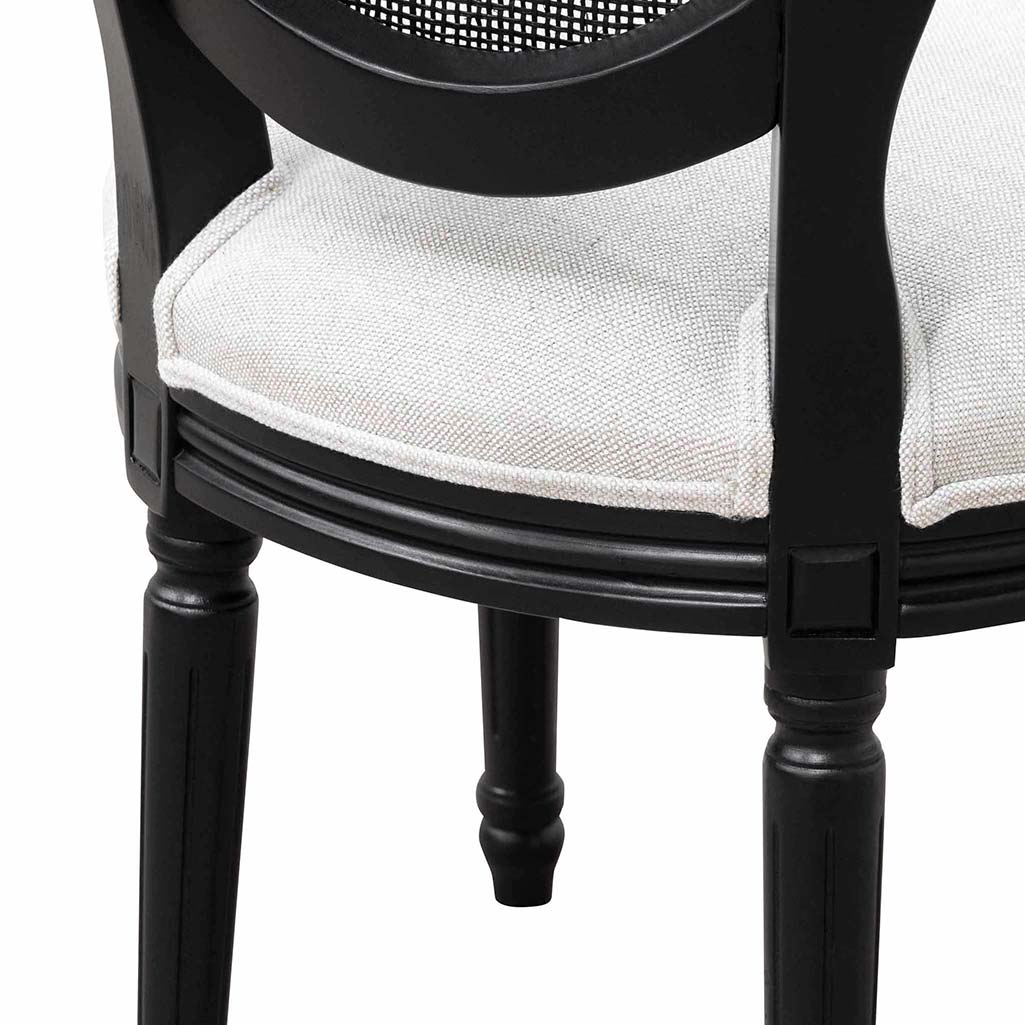
Wooden stools also deserve a little extra attention to overall dimensions because their structures vary significantly. Some have slim Scandinavian legs, others use wide A-frame bases, upholstered seats, full backrests or integrated footrests. Only Dining Chairs’ wooden collection includes backless, upholstered, swivel, rattan-accented and backed designs, so two stools with the same seat height can occupy very different amounts of physical and visual space.
That is why seat height should be your first filter, not your last check. Once the correct height range is established, then compare timber finish, upholstery, back support, swivel functionality and style.
FAQs
What height stool do I need for a 90cm kitchen bench?
A stool around 65cm high is generally the best fit. Australian guidance commonly pairs 900–950mm residential benches with approximately 650mm stools.
What bench height suits a 75cm bar stool?
A 75cm stool generally suits a surface around 100–110cm high, depending on benchtop thickness and the required knee clearance.
Is 75cm too high for a standard kitchen island?
Usually, yes. At a 90cm bench, a 75cm stool leaves only around 15cm between the seat and top surface, which is too cramped for most users.
How much space should there be between a stool seat and the bench?
Aim for approximately 25cm, with around 20–30cm being a useful practical range.
Should I measure stool seat height or overall height?
Use seat height when matching the stool to your counter. Overall height includes the backrest and does not tell you how much legroom you will have. Product specifications illustrate the difference: the Ashbury stool, for example, has a 76cm seat height but measures 103cm overall.