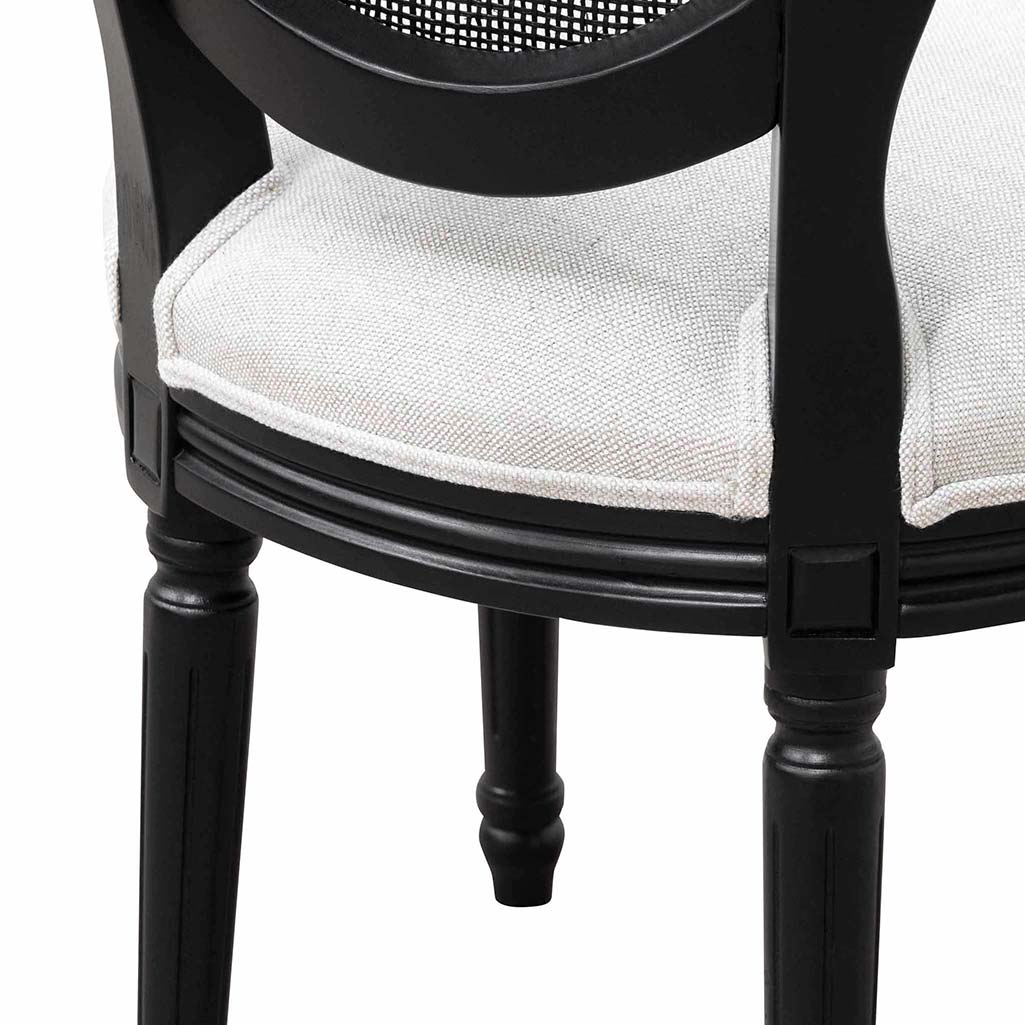




Choosing upholstery for dining chairs is harder than choosing fabric for a decorative armchair. Dining seats deal with constant friction, food spills, oily hands, crumbs, sunlight and repeated cleaning. A fabric can look beautiful in a showroom yet become frustrating after a few months if it stains easily, traps food or needs specialist care.
That is why the best upholstery fabric for dining chairs is not simply the softest or most luxurious option. For most Australian homes, it is the material that balances durability, cleanability, comfort and appearance. Upholstery specialists also caution against judging durability by fibre type alone: construction, abrasion resistance, pilling, seam performance, stain treatments and care requirements all affect how a fabric performs.
This matters when comparing today’s wide range of upholstered dining chairs, which can include conventional woven fabrics, polyester blends, velvet and textured bouclé. Only Dining Chairs’ current Australian collection, for example, includes all of these styles rather than treating “fabric” as a single material category.
What Makes an Upholstery Fabric Suitable for Dining Chairs?
A good dining-chair fabric has to cope with two different forms of wear: physical abrasion from sitting and moving, and staining from meals and everyday life.
The Martindale abrasion test is useful when comparing upholstery because it measures resistance to surface wear. Under relevant Australian classifications, around 20,000 Martindale cycles is considered heavy-duty residential, while ratings above 30,000 cycles can fall into commercial territory when the other required upholstery tests are also met. Importantly, an extremely high rub count does not automatically make a fabric superior; pilling, seams, cleaning requirements and overall construction can become problems before abrasion does.
For a dining room, therefore, look beyond a marketing description such as “premium fabric.” Consider how the chair will actually be used. A couple using the dining table mainly on weekends has very different requirements from a family eating three meals a day with young children.
Cleanability deserves particular attention. Stain-resistant treatments and performance fibres can make upholstery substantially easier to maintain, although finishes are not necessarily permanent. Some treatments are applied to finished fabric, while other performance textiles are engineered with stain resistance built into the material.
Which Upholstery Fabrics Work Best for Dining Chairs?
Performance Polyester and Polyester Blends Are the Best All-Round Choice
For a frequently used dining room, performance polyester or a tightly woven polyester-rich blend is usually the safest starting point.
Polyester upholstery is available in constructions designed for substantial domestic wear, and it can also be combined with stain-resistant technology. Some 100% polyester upholstery fabrics carry a 20,000-cycle Martindale rating and include water-repellent performance characteristics. That does not mean every polyester fabric performs identically, but it shows why composition should be considered alongside finish and testing.
Polyester blends are particularly useful when you want the appearance of a natural textile without relying entirely on a more demanding natural fibre. The La Pyrenee dining chair from Only Dining Chairs illustrates this approach: its grey upholstery is specified as 90% polyester and 10% linen, while the beige version uses 100% polyester.
For homes with children, regular entertaining or daily family dinners, this category generally gives the best compromise between appearance and practicality.
Velvet Is Best When You Want a More Luxurious Finish
Velvet can work surprisingly well on dining chairs, but the word velvet describes a fabric construction, not one universal level of durability or stain resistance. That distinction is important.
Modern polyester performance velvets can be considerably easier to live with than traditional delicate velvet. Some are designed with permanent stain resistance, water repellency and easy-care characteristics.
The practical lesson is to check what the velvet is made from rather than dismissing or choosing it solely because of its appearance.
Only Dining Chairs currently offers velvet options such as the Marion, which uses soft velvet upholstery over a padded seat. The product specification identifies the material as velvet but does not provide the fibre composition on the page, so a buyer concerned specifically about stain treatments or polyester content should confirm those details rather than assuming every velvet is a performance velvet.
Velvet makes particular sense in formal dining rooms, apartments where the dining area forms part of the living space, or interiors where the chairs need to provide visual richness as well as seating.
Bouclé Is Best for Texture, but Requires More Attention
Few upholstery finishes create as much visual texture as bouclé. Its looped surface works especially well with curved contemporary chairs and warm neutral interiors, which explains its popularity in modern furniture.
The disadvantage becomes obvious at mealtime: the same loops that create the texture also give crumbs and liquids more places to settle. Only Dining Chairs’ upholstery guidance notes that spills can work down into bouclé loops, making them more awkward to reach than spills on flatter performance upholstery.
That does not make bouclé a poor dining-chair material. It simply makes it a better fit for some households than others. Only Dining Chairs’ Hillsborough, for instance, is currently available with pepper bouclé as well as flatter beige and charcoal fabric options.
Bouclé is a strong design choice for adult households and lower-mess dining spaces. Homes with toddlers, frequent food spills or pets that scratch furniture may find a smoother, tighter weave easier to maintain.
Linen and Linen Blends Suit Buyers Who Prefer a Natural Look
Linen brings a relaxed, textured appearance that works particularly well with timber furniture, coastal interiors, French Provincial dining rooms and understated contemporary spaces.
It is important, however, not to assume that all linen is fragile. Commercially specified pure linen upholstery can achieve substantial abrasion results, including ratings of around 30,000 Martindale cycles. Its specifications also show why fibre name alone is insufficient: appropriate care, seam reinforcement and the individual fabric construction still matter.
For everyday dining, a linen-polyester blend can provide an easier compromise. The La Pyrenee’s 90% polyester/10% linen grey upholstery is a good example of how furniture manufacturers can combine a linen component with a predominantly synthetic construction.
In other words, read the specification rather than judging a chair from phrases such as “linen look” or even the product’s headline description.

Match the Fabric to the Way Your Household Actually Lives
There is no single upholstery winner for every dining room. A more useful buying strategy is to start with your biggest everyday risk.
-
Young children or frequent spills: favour tightly woven performance polyester, polyester-rich blends or fabrics with documented stain-resistant properties.
-
Pets: smoother, tightly constructed upholstery is generally easier to manage than prominent looped textures such as bouclé, where claws and debris have more opportunity to interact with the surface.
-
Formal dining rooms: velvet delivers greater visual depth and softness, particularly when the chairs are not exposed to constant messy meals. Performance velvet can combine this appearance with easier maintenance.
-
Bright, sunny dining areas: prioritise documented lightfastness as well as abrasion resistance. Direct sunlight should be considered when choosing upholstery.
-
Natural or relaxed interiors: linen or a linen-rich look can work beautifully, but choose an upholstery-grade construction and check its care requirements instead of assuming natural fibre automatically means either delicate or durable.
Colour also affects day-to-day practicality. Mid-tones, textured neutrals and subtly mixed yarns tend to make everyday marks less visually dominant than extremely pale, uniform upholstery. In a low-use formal room, however, there is little reason to avoid cream or beige simply because it requires more care.
Australian Sunlight and Cleaning Should Influence Your Choice
Fabric durability is not only about people sitting on the chair. Light exposure can gradually change upholstery colour, which is especially relevant for dining areas beside large windows and sliding doors.
Only Dining Chairs recommends keeping upholstered chairs away from direct sunlight or using curtains and blinds to reduce UV exposure. Prolonged direct sunlight can fade furnishing textiles.
Routine care matters just as much. Only Dining Chairs recommends regular vacuuming with an upholstery attachment to remove dust and dirt. When spills occur, its guidance is to blot rather than rub and avoid abrasive detergents or harsh chemicals. This is particularly sensible because aggressive rubbing can spread a stain or alter the surface of textured upholstery.
One easily overlooked issue is aftermarket fabric protection. Before applying a new chair treatment or stain protector, check the furniture warranty: Only Dining Chairs specifically warns that some protective treatments may affect warranty coverage and advises considering the terms of any third-party protection service.
That makes manufacturer care instructions more important than generic cleaning advice found online. Two chairs that both appear to be beige polyester may have different coatings, backing materials, dyes and approved cleaning processes.
What to Check Before Buying Upholstered Dining Chairs
The smartest purchase is based on specifications rather than appearance alone.
First, check the actual fibre composition. “Fabric,” “linen,” “velvet,” and “bouclé” do not tell you everything about performance. Only Dining Chairs’ own range demonstrates this clearly: La Pyrenee combines polyester and linen in one colourway, Marion is specified as velvet, and Hillsborough offers both regular fabric and bouclé finishes.
Next, look for an upholstery suitability or abrasion rating where one is available. For normal residential dining, there is little practical value in chasing an enormous Martindale number simply for bragging rights. Around 20,000 cycles can already represent heavy residential performance, while abrasion is only one component of durability.
Then investigate stain resistance, approved cleaning methods and sunlight resistance. A 50,000-rub fabric that is difficult to clean after a pasta-sauce spill may be less useful around a family dining table than a lower-rated fabric specifically designed for easy maintenance.
Finally, think about texture. Run your decision through a simple real-world test: What happens when someone drops food on this chair? A smooth performance weave allows fast access to the spill. A heavily looped or deeply textured surface may require considerably more care.
Frequently Asked Questions
What is the best upholstery fabric for dining chairs?
For most busy homes, a tightly woven performance polyester or polyester-rich blend offers the best balance of durability, stain management and everyday maintenance. The exact construction and care specification still matter.
Is velvet practical for dining chairs?
Yes, especially when it is a performance polyester velvet with stain-resistant properties. Traditional or unspecified velvet may require more careful maintenance, so always check the composition and care instructions.
Is bouclé a good choice for families with children?
It can be durable, but its looped texture makes trapped crumbs and spills harder to deal with than on a flatter weave. A smooth performance fabric is generally the easier choice for very messy dining areas.