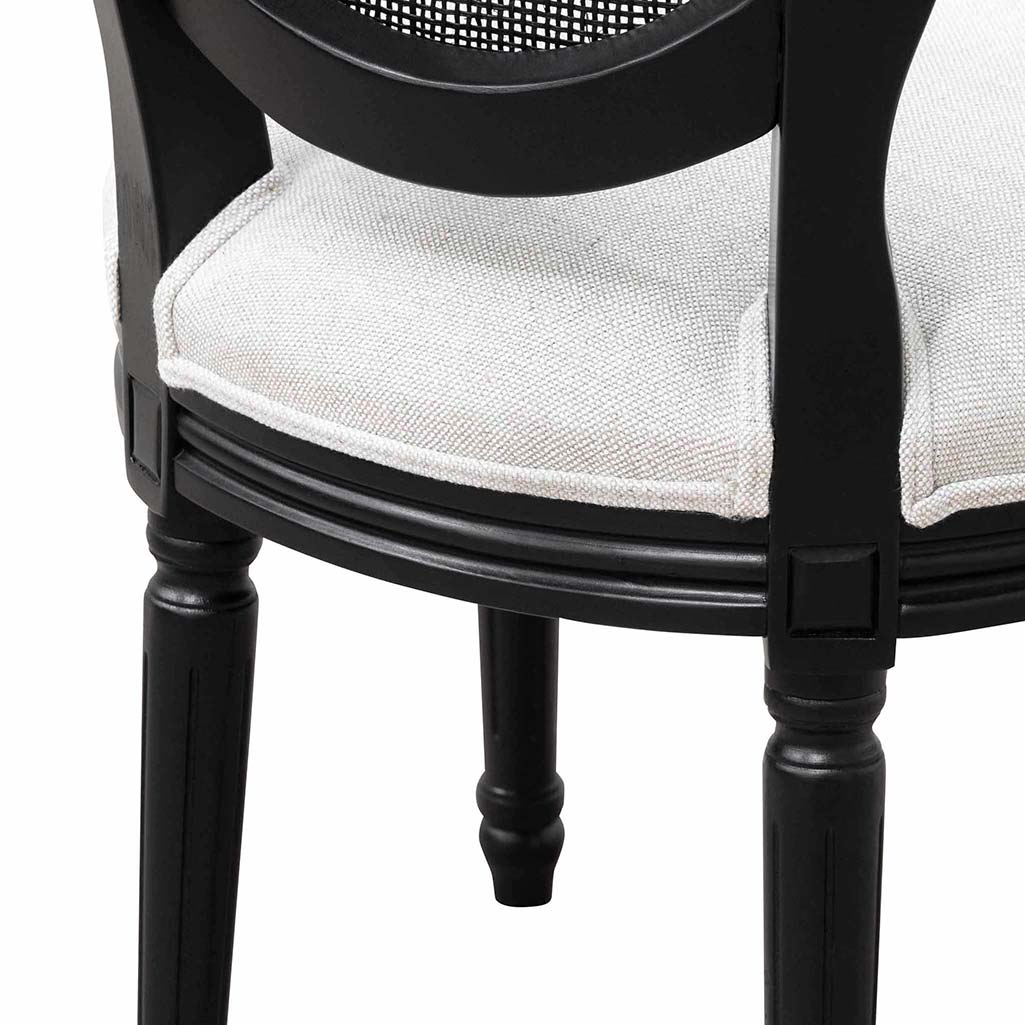




Choosing between genuine leather and faux leather dining chairs is not simply a question of whether one looks “more expensive” than the other. Dining chairs are high-contact furniture: they are pulled in and out, exposed to food, drinks, body oils and clothing, and often positioned beside large windows. The upholstery material directly affects how the chairs age, how much maintenance they need, and whether the initial purchase price represents good long-term value.
The choice can also be confusing because furniture terminology is not always obvious. A chair described broadly as “leather” may use genuine animal-hide leather, polyurethane (PU), PVC, faux leather, or another leather-look material. Only Dining Chairs’ current Australian collection, for example, includes products specifically labelled PU leather, PVC and faux leather alongside products described simply as leather.
That distinction matters. Product-composition claims should be accurate, and products sold to Australian consumers must match their description.
Understanding what each material actually offers makes it much easier to choose dining chairs that suit your budget, household and expectations.
What You Are Actually Buying When a Chair Says “Leather”
Genuine Leather Comes From Animal Hide
Genuine leather is made by tanning animal hide or skin. However, “genuine leather” should not be treated as a precise quality grade. Real leather encompasses different constructions and finishes, including full-grain, top-grain, corrected-grain and split leather. Full-grain retains more of the original grain surface, while other leathers may be buffed, corrected, embossed or heavily finished to create a more consistent appearance.
This explains why two genuine leather dining chairs can behave quite differently even though both are technically real leather. A heavily protected leather may be well suited to a busy family dining room because its finish helps resist everyday soiling, while a more natural, lightly finished leather may show marks and colour variation more readily.
Real leather also changes with use. Natural markings, grain variations and small differences between hides are normal rather than manufacturing defects, and quality leather can soften and develop character as it ages. Natural leather develops wrinkles, stretching and patina over time rather than permanently retaining its showroom-perfect surface.
Faux Leather Uses a Manufactured Leather-Look Surface
Faux leather is designed to reproduce the appearance of leather without using an animal hide as its main surface material. Common versions use polyurethane or PVC applied over a textile or similar backing.
That construction gives faux leather several practical advantages. Manufacturers can create highly consistent colours and grain patterns, and the coated surface can be straightforward to wipe clean. It also generally costs less to produce than comparable genuine leather, which is why faux upholstery is common on value-focused dining chairs. Only Dining Chairs itself notes that synthetic leathers typically cost less than genuine leather.
The terminology still deserves attention. Terms such as “PU leather,” “faux leather,” “PVC leather,” “leather-look” and even “eco leather” can appear in furniture descriptions. For example, one current Only Dining Chairs product describes its black upholstery as both PU leather and eco leather. The safest approach is therefore to read the actual material specification rather than making assumptions from the product name alone.
The Key Differences That Affect Everyday Dining
The important differences become clearer when the materials are considered from the perspective of daily use rather than appearance alone.
|
Factor |
Genuine leather |
Faux leather |
|
Material |
Tanned animal hide or skin |
Usually a synthetic coating such as PU or PVC over a backing |
|
Appearance |
Natural grain and variation; can develop patina |
More uniform grain, texture and colour |
|
Upfront cost |
Usually higher |
Usually more budget-friendly |
|
Ageing |
Can soften, crease and gain character |
Usually retains a consistent look until the coating begins wearing |
|
Common wear concerns |
Scratching, staining, drying or fading if poorly maintained |
Cracking, peeling or delamination can occur as the coating deteriorates |
|
Cleaning |
Needs products compatible with the specific leather finish |
Usually straightforward surface wiping, but harsh chemicals should still be avoided |
|
Conditioning |
Often beneficial when recommended by the manufacturer |
Traditional leather conditioner is generally inappropriate for PU |
|
Animal-derived material |
Yes |
Generally no animal hide in standard PU/PVC faux leather |
These differences also affect how damage appears. Genuine leather tends to age progressively: wrinkles, surface variation and small marks may become part of its appearance. PU upholstery can experience a different type of deterioration because the polyurethane coating itself can break down. Extended exposure to heat and humidity can eventually lead to cracking, peeling or delamination.
That does not mean every faux leather chair will peel quickly, nor does it mean every genuine leather chair will last indefinitely. Upholstery quality, frame construction, stitching, usage, cleaning practices and environmental conditions all influence the actual lifespan. Even standardised upholstery testing does not translate directly into a guaranteed number of years in a home.
Which Material Performs Better in Australian Dining Rooms?
Australian conditions make placement particularly important. Australia experiences high levels of solar ultraviolet radiation, and direct sunlight can cause leather to discolour, dry out and become brittle.
So a genuine leather chair sitting beside a large north- or west-facing window requires more attention than the same chair in a shaded dining room. Window coverings, sensible positioning and avoiding direct heat can help protect the upholstery.
Humidity introduces a different consideration. Prolonged heat and moisture exposure can be an important performance issue for polyurethane-coated upholstery. This is especially worth considering in humid environments or rooms with poor ventilation.
For a family home, faux leather can nevertheless be extremely practical. A coated seat can be appealing when children regularly drop food or drinks because routine spills can usually be dealt with quickly without conditioning the material afterward. Only Dining Chairs’ own care guidance recommends gentle cleaning, minimal moisture and avoiding oils, waxes, alcohol and solvent cleaners on PU surfaces.
Genuine leather asks slightly more of the owner. Spills still need prompt attention, and manufacturer-approved cleaning and conditioning products should be used rather than multipurpose household cleaners. Avoid detergents, alcohol, wax, window cleaner and other products not intended for the specific leather. Regular dust removal and appropriate conditioning, according to the leather and environment, are also recommended.
In practical terms, faux leather often wins on simple day-to-day maintenance, while quality genuine leather has the advantage when the goal is natural ageing and long-term character.

How to Choose the Right Leather Dining Chairs for Your Home
Rather than deciding that one material is universally “better,” start with how the chairs will actually be used.
-
Choose genuine leather when longevity, natural texture and ageing character are priorities. Ask what type of leather is used rather than relying only on the words “genuine leather.” Also check which sections of the chair are actually leather and what care products the manufacturer recommends.
-
Choose faux leather when affordability, a consistent appearance and easy everyday wiping matter most. For PU upholstery, ask about upholstery quality and resistance to heat and humidity if the chairs will receive heavy use or sit in a warm, humid environment.
-
Check the entire chair, not just the upholstery. Good upholstery cannot compensate for weak joints, inadequate padding or an unsuitable frame. Only Dining Chairs itself advises buyers to consider sturdy legs, cushioning and overall construction alongside upholstery.
-
Treat environmental claims carefully. Genuine leather involves animal hides and tanning, while conventional faux leather commonly relies on PU or PVC.
-
Keep the product description and care instructions. Under Australian Consumer Law, products must match their description and be of acceptable quality, which includes reasonable durability based on factors such as the product, price, materials, claims and expected use. These automatic rights exist separately from any retailer or manufacturer warranty.
For example, a couple furnishing an adults-only formal dining room may appreciate genuine leather that develops richer character over years. A young family needing six chairs for everyday breakfasts, homework and messy dinners may value a well-made PU chair that can be wiped down quickly. A café or short-stay accommodation operator should look even further, considering commercial-use specifications, cleanability and upholstery-performance information rather than making the decision from appearance alone.
The Better Choice Depends on What You Expect From the Chair
The genuine leather versus faux leather debate has no universal winner because the two materials solve different problems.
Genuine leather is the stronger choice for buyers who value natural material, individual grain, ageing character and the potential for a long service life with appropriate care. Its drawbacks are a higher purchase price and greater sensitivity to inappropriate cleaning, direct sunlight and neglect.
Faux leather is often the more practical option for buyers prioritising price, uniformity and easy routine maintenance. Good PU upholstery can work very well on dining seating, but shoppers should understand that it is a coated material whose long-term performance depends heavily on the quality of that coating and its resistance to factors such as heat, humidity and repeated use.
For Australian shoppers browsing leather dining chairs, the smartest approach is therefore to look beyond the product photograph and the word “leather.” Check whether the upholstery is genuine hide, PU, PVC or another material; examine the frame and cushioning; consider the room’s sunlight and humidity; and read the care and warranty information before purchasing. Only Dining Chairs’ current collection demonstrates why that distinction matters, with leather-look seating available across PU, PVC, faux and other leather-labelled styles.
The future of dining-chair upholstery will likely bring even more material choices rather than one material replacing another. For buyers, that makes transparent composition information increasingly valuable. The chair that delivers the best value is ultimately not the one with the most impressive material name—it is the one whose upholstery, construction, maintenance requirements and expected lifespan genuinely suit the way the dining space is used.
FAQs
Is genuine leather better than faux leather for dining chairs?
Not automatically. Genuine leather is preferable for natural appearance, ageing character and long-term ownership, while faux leather can be better for lower budgets and straightforward everyday cleaning.
Does faux leather peel?
PU upholstery can eventually crack, peel or delaminate when its coating deteriorates. Heat and humidity are among the factors relevant to its resistance, although actual performance varies significantly by upholstery quality.
How can I tell whether a dining chair is genuine leather?
Check the detailed material specifications and ask the retailer to confirm the upholstery composition. Do not rely solely on words such as “leather,” “eco leather” or a leather-like product name. Australian Consumer Law requires product descriptions to be accurate.
Is PU leather suitable for dining chairs with children?
It can be a practical option because its coated surface suits routine wiping. Clean spills promptly with products appropriate for PU and avoid harsh solvents, alcohol, oils and traditional leather conditioners unless specifically approved.
Should genuine leather dining chairs be kept out of direct sunlight?
Yes. Prolonged direct sunlight can contribute to discolouration, drying and brittleness in leather, making sensible positioning and window coverings particularly worthwhile in bright Australian dining spaces.