



Choosing a dining table set looks simple until you try to fit one into a real home. A table can look perfectly proportioned online yet dominate the room once the chairs are pulled out. A stylish round table can work beautifully in a breakfast nook but feel undersized in a long open-plan area. And a surface that looks impressive in photos may demand more maintenance than your household realistically wants to give it.
The best dining set is therefore not simply the one that matches your decor. It needs to fit the room with the chairs in use, seat the right number of people comfortably, support the way you actually live, and use materials you are prepared to maintain. That matters whether you are furnishing a compact apartment, a family dining area or an outdoor entertaining space.
The current Only Dining Chairs range reflects those different needs, with compact two-person sets, four- and six-seater indoor options, round and drop-leaf designs, marble-effect and wooden finishes, plus larger outdoor PE-wicker dining settings.
Get the Size Right Before You Think About Style
The most common sizing mistake is measuring only the space occupied by the tabletop. A dining area also needs room for chairs to slide backward and, ideally, enough circulation space for someone to walk behind a seated diner.
Australian furniture guidance commonly suggests leaving about 90 cm or more between the table and nearby walls or furniture. Around 1–1.2 m is even more comfortable where generous circulation is possible.
Measure the Dining Zone, Not Just the Empty Floor
Start by measuring the usable dining area, including nearby kitchen benches, doors, sideboards and major walking routes.
A practical way to test a table is to mark its dimensions on the floor with painter’s tape. Then mentally add around 90 cm around the edges where chairs need to operate. This makes it easier to visualise how much floor space a dining arrangement will consume.
For example, a 180 cm × 90 cm rectangular table may physically fit inside a 3 m-wide room. But once chairs and circulation are considered, that fit could become uncomfortable. The question should therefore be, “Can we use this table comfortably?” rather than simply, “Can we fit it through the door?”
Work From the Number of Regular Diners
As a useful starting point, allow approximately 55–60 cm of table edge per person.
That gives you a practical framework:
-
A couple in an apartment may be better served by a two- or four-seat compact table than a large six-seater that consumes valuable floor space.
-
A family of four that regularly entertains should consider a six-seater, drop-leaf or extendable design rather than sizing only for everyday meals.
-
For a rectangular table used for shared dishes and serving platters, tabletop width matters too. Around 90 cm of width provides room for place settings and food, although deliberately compact tables can be narrower.
Buying for your normal household plus occasional guests usually creates a more useful dining space than simply choosing the largest table the room can theoretically accommodate. Consider an extendable table when extra seating is needed only occasionally.
Match the Table Shape to the Room and How You Entertain
Shape changes more than appearance. It determines how people move around the table, where chairs can sit and how naturally the furniture relates to the proportions of the room.
Rectangular Tables Work Naturally in Longer Spaces
A rectangular dining table is usually the easiest choice for a long dining room, a larger family or frequent entertaining. Its linear form follows the proportions of narrow and elongated rooms, while the longer edges make it straightforward to organise several seats. Rectangular tables are generally well suited to long or slim dining areas.
Rectangular tables can also visually define an open-plan dining area. The trade-off is that corners and four-leg designs may consume more circulation and leg space, particularly in compact rooms.
Round Tables Make Compact Areas Feel Easier to Navigate
A round table is especially useful in a square room, breakfast nook or smaller dining zone because there are no projecting corners to interrupt the path around it. Small round tables often work well in smaller and square dining areas, while also improving circulation in dual-purpose spaces.
Round tables also change the social feel of dinner. Because there is no formal head of the table and diners face one another more evenly, conversation and shared dishes can feel more natural.
Look closely at the base as well as the tabletop. A central pedestal can free the perimeter from corner legs, making it easier to position chairs and occasionally squeeze in an extra seat.
Oval and Square Tables Solve More Specific Layout Problems
An oval table provides much of the serving area of a rectangle but replaces hard corners with curved ends. Oval tables can be a useful middle ground between rectangular and round designs, particularly when you want generous seating without creating as many awkward corners in circulation routes.
Square tables work best when both the room and dining group are relatively compact. For larger households, they can become impractically wide because diners opposite one another are pushed farther apart.
Choose a Material That Fits Your Everyday Life
Material should be selected according to durability, maintenance, visual weight and location, not appearance alone. Timber provides a warmer, versatile look, glass reduces visual heaviness, while stone- and marble-look surfaces create a stronger focal point.
Timber Is Versatile but the Finish Matters
Wood works across Scandinavian, coastal, traditional, industrial and contemporary interiors. More importantly, however, check what “wood” actually means on the specification sheet.
Dining furniture may use solid timber, timber veneer over an engineered core, lacquered wood or combinations of different construction materials. Some dining tables combine solid-wood components with veneer, fibreboard and particleboard surfaces.
That is not automatically a reason to prefer one construction over another. It is a reason to read the care instructions for the specific finish rather than assuming every wooden-looking table should be cleaned or refinished in the same way.
For routine care, manufacturers generally recommend soft damp cloths and protection from hot or wet objects. Some timber finishes may also benefit from an appropriate furniture oil, wax or polish when specified by the manufacturer.
Glass Keeps the Room Visually Open
Glass can be particularly effective where floor area is limited because you can see through the tabletop instead of creating a large solid visual block. Glass dining tables can add brightness and make smaller dining spaces appear less bulky than comparable timber tables.
The downside is practical: fingerprints, smudges and surface marks tend to be more visible. Use non-abrasive cleaning products, placemats and coasters, and inspect the supporting frame and glass fixings as recommended by the manufacturer.
Marble, Stone and Marble-Effect Surfaces Need Different Expectations
Natural marble creates variation that manufactured marble-look surfaces are designed to imitate, but the maintenance requirements are not identical.
Natural stone such as marble is porous enough that spills should be dealt with promptly, and furniture-care guidance recommends avoiding acidic and abrasive cleaners. A marble-effect tabletop, by contrast, may use manufactured wood or another substrate with a decorative finish.
So do not shop from the word “marble” in a product title alone. Check whether the specification says natural marble, ceramic, sintered stone, glass, laminate or marble-effect manufactured board. That information tells you much more about weight, care and everyday use.
For outdoor sets, material selection becomes even more important. Only Dining Chairs currently carries PE-wicker and metal-based outdoor dining settings in multiple seating capacities, while outdoor-furniture guidance notes that weather resistance varies by material and that some pieces are designed for covered rather than fully exposed locations.
Check Chair Fit and Comfort Before Buying the Complete Set
Buying a coordinated dining table set removes much of the guesswork involved in matching separate tables and chairs, but dimensions still deserve attention.
A typical dining chair seat is around 45–48 cm high, and approximately 25–30 cm between the seat and tabletop is generally comfortable. Only Dining Chairs’ current collection also includes seat-height filters around 45 cm and 46–49 cm, showing why actual measurements are worth checking rather than assuming all dining chairs sit at exactly the same height.
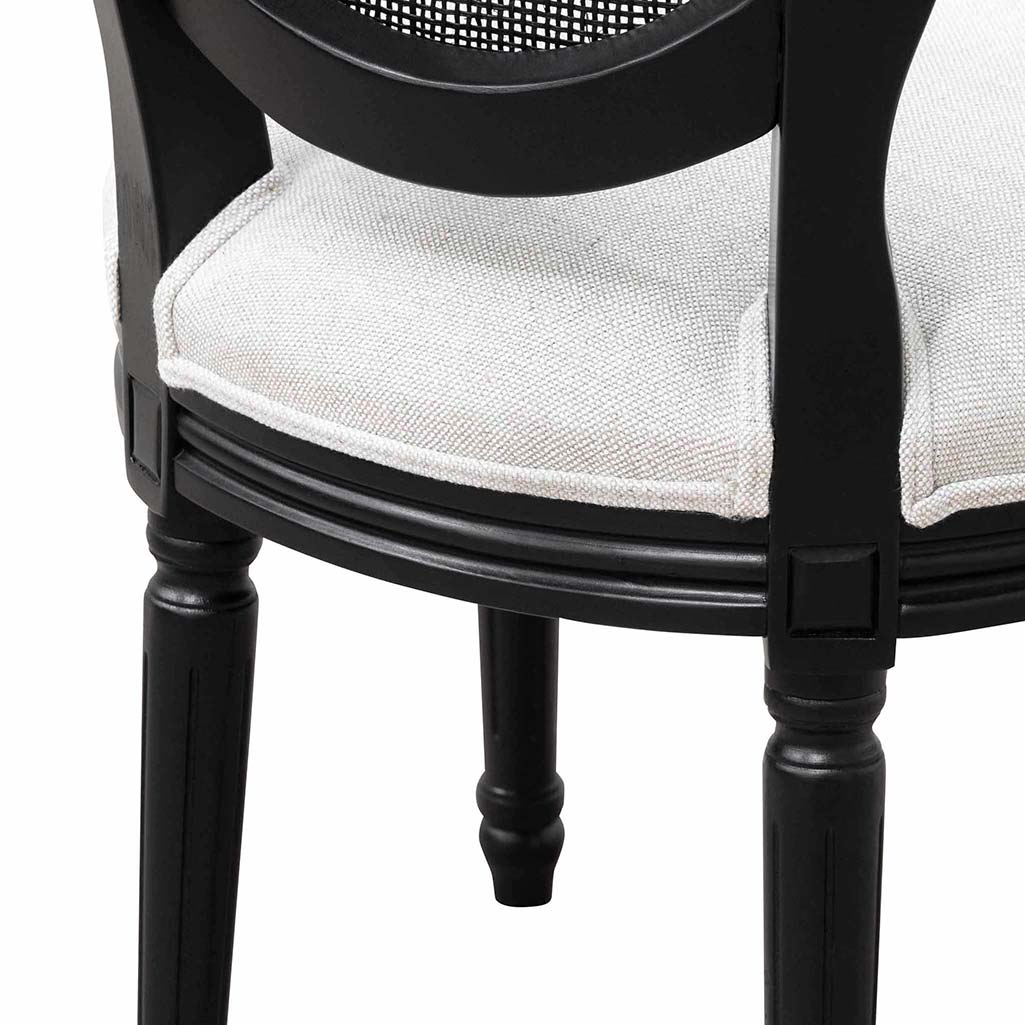
Pay particular attention to chairs with arms. The seat may fit perfectly while the armrests collide with a low table apron, preventing the chair from sliding underneath. Check arm height against the underside of the table before purchase.
Also consider the table base. Four thick corner legs can limit where chairs sit; pedestal and trestle bases distribute space differently. For households that regularly add an extra chair, usable space between the legs can matter just as much as overall tabletop length.
Use a Final Buying Checklist Before You Order
Once you have narrowed down the style, run through the practical details one last time:
-
Room fit: Measure the table and allow roughly 90 cm or more where chairs need to pull out and people need to pass.
-
Seating: Calculate roughly 55–60 cm of usable table edge per diner rather than relying only on the product’s advertised seat count.
-
Chair clearance: Confirm seat height, armrest height, table-apron clearance and the position of the table legs.
-
Material: Read the actual construction and care specifications, especially when comparing timber, veneer, marble, marble-effect and outdoor surfaces.
-
Future use: Consider drop-leaf or extendable designs when you need a compact everyday footprint but occasionally host more people. The Only Dining Chairs range currently includes a drop-leaf dining set, while expandable tables can be useful for changing entertaining needs.
A five-minute measurement check now can prevent years of shuffling chairs around an oversized table.
Choose for the Way You Live, Not Just the Way the Table Looks
A well-chosen dining table set balances three decisions: size determines whether the room functions, shape determines how the table fits and flows, and material determines how the furniture looks and behaves in everyday use. Furniture and interiors guidance consistently emphasises space around the chairs, compatibility between table shape and room shape, and material-specific care rather than choosing on aesthetics alone.
Start with measurements, then decide how many people you genuinely need to seat. Choose the shape that works with the room rather than against it, and finally select a material whose maintenance suits your household.
That approach also makes a dining set more adaptable over time. A compact drop-leaf table, a generous rectangular family setting or an easy-to-circulate round table can all be the right choice—the important part is matching the furniture to the space and lifestyle it will serve.
Frequently Asked Questions
What size dining table should I choose for four people?
Allow roughly 55–60 cm of table edge per diner. The exact dimensions will depend on the shape, base and chair width, so check the manufacturer’s seating recommendation as well as the measurements.
How much space should I leave around a dining table?
Aim for approximately 90 cm or more between the table and walls or nearby furniture where chairs need to pull out. Around 1–1.2 m provides more comfortable circulation where the room allows it.
Is a round or rectangular dining table better for a small room?
Round tables usually work particularly well in compact or square dining areas because they remove projecting corners. Rectangular tables are generally better suited to long or narrow spaces.
What is the easiest dining-table material to maintain?
There is no universally maintenance-free material. Lacquered or manufactured finishes can be straightforward to wipe down, while timber, glass and natural stone have different care requirements. Always follow the care instructions for the exact surface rather than the appearance alone.
Should I buy a dining table and chairs as a set?
A complete set can simplify matching seat height, proportions and style. Separate pieces offer more design flexibility, but you need to verify chair height, arm clearance, table-apron height and leg positioning yourself.