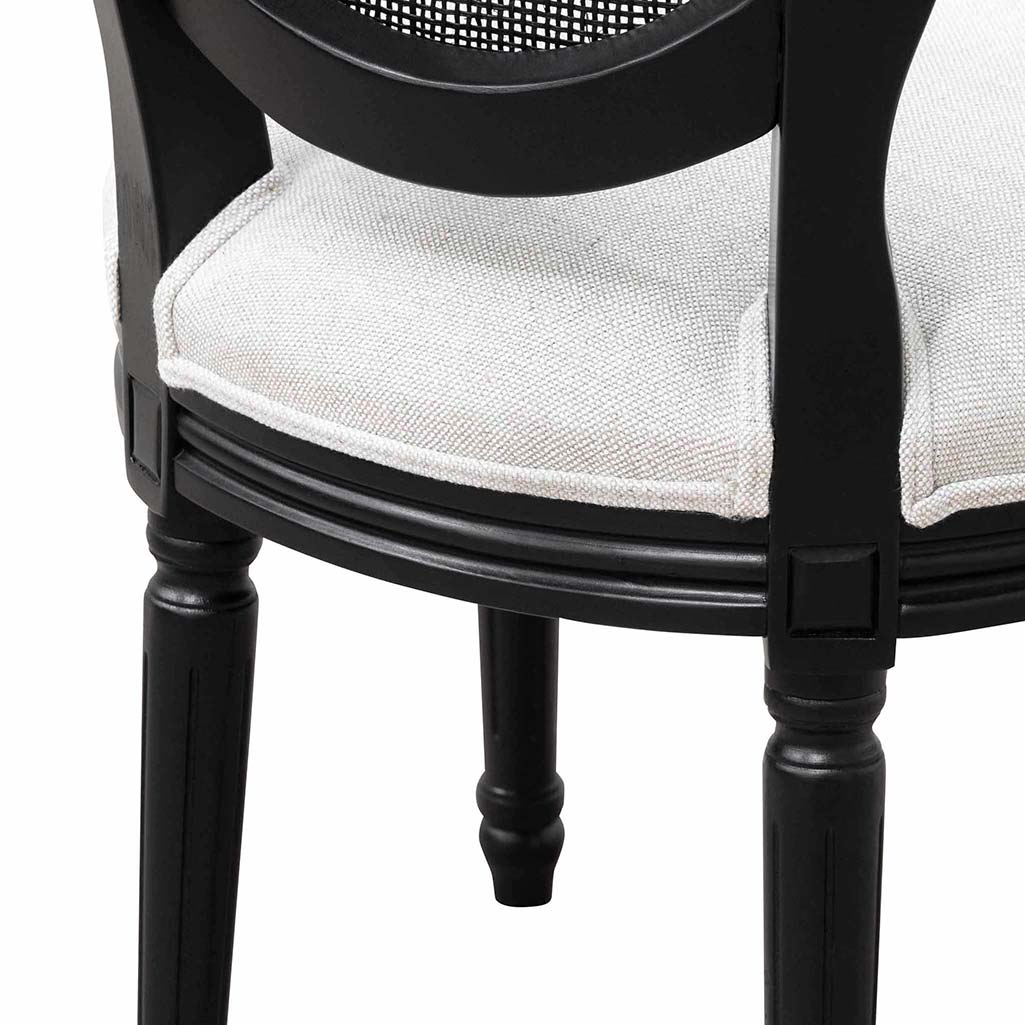




Most people choose a dining chair the way they choose a jacket in a shop mirror. It looks good, they sit for ten seconds, they buy it. Then the chair goes home to a table where people eat bolognese, knock over wine, drop toast butter-side down, and drag it in and out fifty times a week. That's where the "does it look nice" question quietly turns into "was this a mistake."
Velvet and fabric are the two options that trip people up the most, partly because the comparison itself is a bit misleading. Before you can decide which is more practical, it helps to know what you're actually comparing.
First, a small but important clarification
Velvet is a fabric. It isn't a separate material sitting on the other side of a fence from "fabric." It's a weave with a raised pile, that soft, brushed surface that catches the light and changes colour depending on which way you stroke it.
So when someone asks "velvet or fabric," what they usually mean is velvet versus a flat woven fabric, the kind you get in linen, cotton blends, polyester weaves, boucle, or chenille. That distinction matters, because the honest answer to the practicality question isn't "velvet" or "fabric." It's the weave, the fibre, and whether it's been treated to survive real life. Two velvets can behave completely differently. So can two "plain" fabrics.
Keep that in mind as we go, because a lot of the confusion around this topic comes from treating "fabric" like one thing when it's really a dozen.
What velvet actually brings to a dining chair
The appeal is obvious the second you see velvet under good light. The pile gives it depth, so a single colour reads as several shades at once. A deep green or a rust velvet chair looks far richer than the same colour in a flat weave, and that's the whole reason it's having such a long moment in Australian dining rooms.
There's a practical twist here that surprises people. Old-fashioned velvet was cotton, silk, or viscose, and it was genuinely delicate. Modern velvet on most retail dining chairs is polyester, often called performance velvet, and it's a different animal. The pile is tighter, the fibre doesn't absorb water the way cotton does, and spills tend to sit on the surface for a moment before soaking in. That moment is your window to blot.
Velvet also feels warm and soft, which is lovely in a Melbourne winter and less lovely in a humid Brisbane February. Worth remembering if your dining room cops afternoon heat.
"Fabric" covers a lot of ground, and the label hides the differences
This is where the shopping gets tricky, because "fabric dining chair" tells you almost nothing. The word covers linen that stains if you look at it wrong, and it covers heavy-duty performance polyester you can practically hose down. Same label, opposite experience.
A few of the common ones and how they behave at a dinner table:
-
Linen looks relaxed and breathes beautifully, but it drinks up spills fast and creases. Gorgeous for a formal room, hard work for a kids' table.
-
Polyester and poly blends are the quiet workhorses. Often the easiest to clean, usually the most affordable, and many are made specifically to shrug off stains.
-
Boucle is everywhere right now and it's soft and textured, but those little loops trap crumbs and sauce, and you can't scrub loops hard without pulling threads.
-
Chenille is soft, warm, and tougher than it looks, sitting somewhere between velvet and a flat weave in feel.
So when you compare "velvet versus fabric," you're really comparing one pile weave against a whole category. The useful question is never the word on the tag. It's what the fibre is and whether it's been treated.
The real test: how each holds up at the dinner table
A dining chair lives harder than a lounge. Food, drink, elbows, kids, guests who lean back on two legs. Here's how the two options actually cope.
Spills and stains
Performance velvet does better than its reputation suggests. Because the tight polyester pile resists soaking, a splash of water or wine often beads on top long enough to blot away. Natural velvet is the opposite. Water alone can leave a mark, because it disturbs the direction of the pile and dries into a faint ring, which is a genuine problem for a surface that meets food every day.
Flat woven fabrics vary wildly. An untreated linen or cotton grabs oil-based sauces like curry or bolognese and holds on. A treated performance polyester lets most of it wipe off. Boucle is the awkward one, since spills settle into the loops where they're hard to reach.
Everyday cleaning
Velvet asks for a bit of ritual. You vacuum with a soft brush head, wipe spills in the direction of the pile rather than against it, and occasionally steam or brush the pile back up where it's flattened. It's not hard, but it's a habit you have to keep.
Flat fabrics are usually more forgiving for quick clean-ups, and some chairs come with removable, washable covers, which is honestly the single most practical feature you can find in this whole category. If you've got young kids, a chair whose cover goes in the wash beats almost any fibre debate.
Whichever you choose, check the cleaning code on the label. A "W" means water-based cleaners are fine, "S" means solvent only, "WS" gives you both, and "X" means vacuum only, which for a dining chair is a warning sign.
How they age
This is where velvet divides people. Sit on it daily and the pile flattens where your weight lands, and it starts reflecting light unevenly, so you get lighter and darker patches. The trade calls it shading or pressure marks. Some people read it as a character, like a worn leather satchel. On a chair you use three times a day, it can just look tired, and cotton velvet shows it far faster than polyester.
Flat fabrics age differently. Cheaper weaves can pill those tiny fibre balls that form with friction. Linen softens and rumples, which suits a casual room and annoys anyone who likes crisp things. Good performance weaves mostly just keep looking like themselves, which is part of why they're so popular for busy households.
Pets, crumbs, and dust
If you own a dog or a cat, this one might settle the whole argument. Velvet's pile grabs hair and dust and holds it, so you'll be reaching for the lint roller constantly. A short flat weave releases hair far more easily. Same goes for dust in a sunlit room, where velvet shows every speck.
Comfort through a long dinner
Velvet wins on first impression. It's soft and cushioned and cosy. But over a two-hour Sunday lunch in summer, a breathable linen or a mid-weight poly weave can feel cooler and less sticky. Comfort isn't only about softness. Airflow matters more than people expect once the room warms up.

Match the upholstery to how you actually live
Forget which fabric is "best" in the abstract. The right choice depends entirely on your table. A few honest scenarios:
-
Young kids or messy eaters: prioritise removable washable covers or a treated performance fabric. Skip pale solids and natural velvet.
-
Pet owners: lean toward short flat weaves that shed hair easily, and avoid deep-pile velvet unless you enjoy lint rolling.
-
A formal dining room used a few times a month: this is where velvet earns its place. Low use means the pile stays even, and the look pays off.
-
The everyday family table: performance polyester or chenille handles daily punishment without much fuss.
-
Renters or tight budgets: a good poly weave gives you durability and easy cleaning without the price jump.
The Australian climate factor most guides ignore
Upholstery advice written for cooler countries misses a few things that matter a lot here.
Sun is the big one. North and west-facing windows push strong UV across a room, and it fades upholstery over time. Deep velvet colours can go patchy where the light hits, so if your chairs sit in a sunny open-plan space, ask specifically about UV-stable or fade-resistant fabrics.
Humidity is the other. In coastal and northern areas, natural fibres like linen and cotton velvet can hold moisture, and a poorly ventilated dining nook can start to smell musty. Synthetics cope with damp far better, which is worth weighing up if you're anywhere near the coast.
And because so many Australian homes run one big indoor-outdoor living zone, dining chairs often sit close to the kitchen, the barbecue traffic, and open doors. That's a high-exposure spot, which nudges the sensible choice toward something you can wipe down without a second thought.
A simple way to decide before you buy
When you've narrowed it down, a few checks save a lot of regret:
-
Ask whether the fabric is performance-treated, and how it rates for rub durability. A higher rub count means it survives frequent use.
-
Read the cleaning code and picture your worst-case spill against it.
-
Chase removable, washable covers if kids or pets are in the mix.
-
Choose colour with marks in mind. Very pale solids show food, very dark solids show dust and hair, so mid-tones and subtle textures hide daily life best.
-
Order swatches. Rub them, drip water on them, leave them in your dining room light for a day. Ten minutes of testing beats a showroom guess.
So, which is more practical?
If you want the short version: a treated performance fabric is usually the more practical everyday choice, and velvet rewards you most in rooms that don't take a daily beating. But the real answer sits underneath the velvet-versus-fabric framing, because velvet is a fabric, and a performance velvet can outlast a cheap linen without breaking a sweat.
Practicality comes down to three things you can actually check: the fibre, whether it's been treated, and whether you can clean it the way your household actually eats. Get those right and both options can work beautifully. The good news is that performance fabrics keep getting better, so the old trade-off between a chair that looks luxurious and one that survives Sunday lunch is smaller every year. Buy for your table's real life, not the showroom version of it, and you'll be happy long after the novelty wears off.
FAQs
Is velvet a good choice for dining chairs?
Yes, if it's polyester performance velvet and the room isn't in heavy daily use. It resists spills better than people expect. Natural velvet, though, marks easily and isn't ideal around food.
Which is easier to clean, velvet or fabric?
Flat performance fabrics are usually easier for quick clean-ups, especially ones with washable covers. Velvet cleans fine but needs a bit more care, like brushing the pile back into place and wiping with the grain.
Does velvet attract pet hair and dust?
Yes. The pile grabs hair and dust and holds onto it, so pet owners will use a lint roller often. A short flat weave releases hair much more easily.
Will upholstered dining chairs fade in the Australian sun?
They can, especially near north or west-facing windows. Deep velvet colours are prone to patchy fading, so ask for UV-stable or fade-resistant fabric if your chairs sit in strong light.
What's the most practical fabric for a family with young kids?
A treated performance polyester, or any chair with a removable, washable cover. Avoid pale solids and natural velvet, since both show mess quickly and are harder to fully clean.